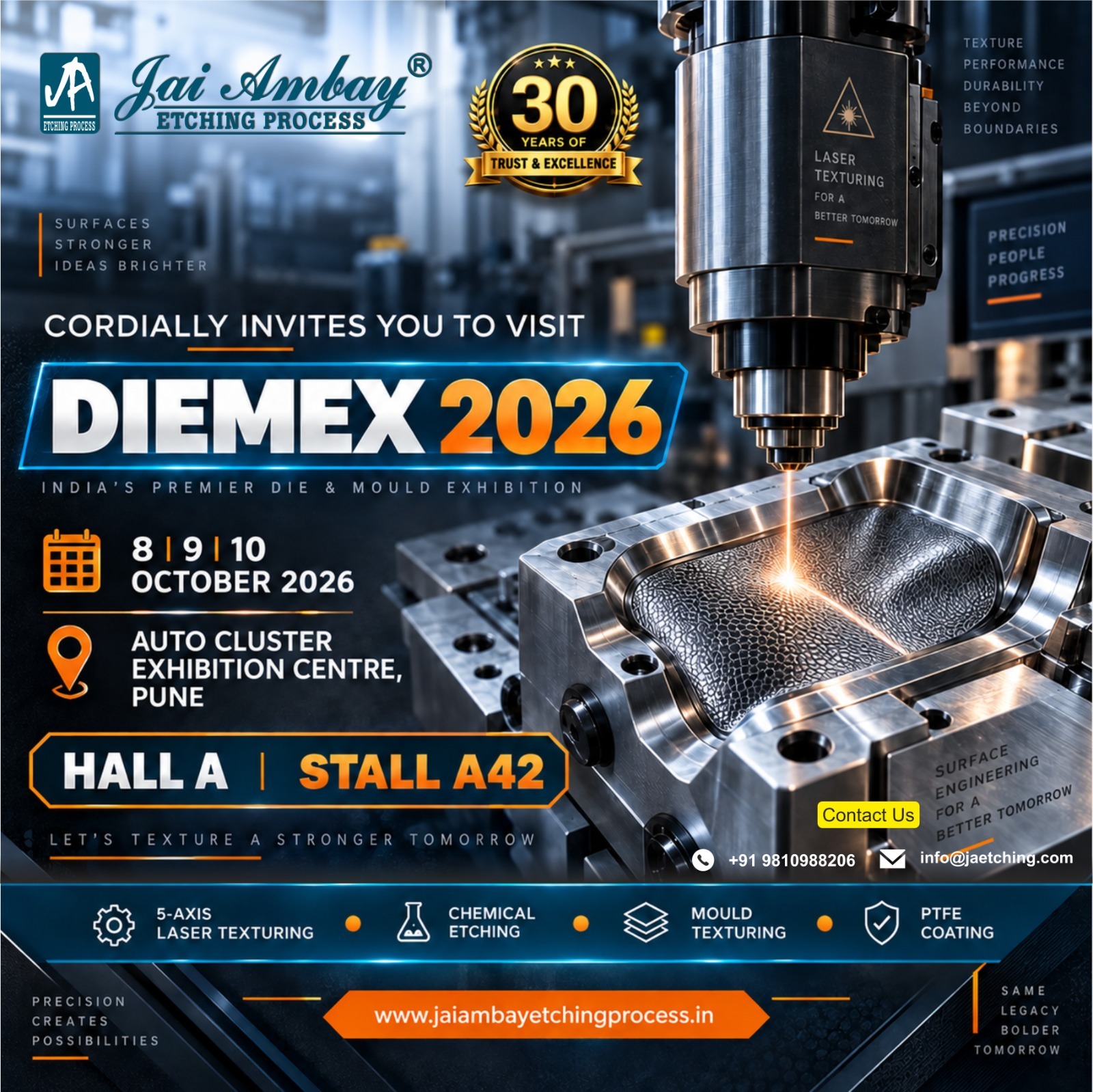

The technique of 3D Surface Etching is a technology that is employed to enhance the appearance of the material by forming specific textures. This technology not only improves the functionality but also increases the appearance of the surface.
3D Surface etching can be applied in many places from molds to other industrial surfaces.

Process Involved
Advantages
Application
Comparison Chart
Reasons for Selecting 3D Surface Etching
Conclusion
Introduction to 3D Surface Etching
3D Surface Etching refers to a technique whereby material is selectively removed from the surface to generate depth and texture on it. The process enables producers to fabricate sophisticated three-dimensional images with high accuracy.
The steps include:
Surface preparation
Generation of design pattern
Etching process
Inspection

Precision – Ideal for complex textures
Depth Control – Capacity to produce varying depths on surface designs
Mechanical Pressure-Free – No mechanical pressure is required
Uniformity – Offers consistent results
Durable Textures – Develops lasting texture designs
Flexibility – Can be used on different surfaces
Cost-Effective – Economical method in the long run
Designing textures in molds
Automobile interior surfaces
Industrial components
Aesthetically appealing surfaces
Consumable products
| Feature | Traditional Etching | 3D Surface Etching |
|---|---|---|
| Precision | Medium | Very High |
| Depth Control | Limited | Advanced |
| Surface Complexity | Basic | Complex |
| Tool Wear | High | None |
| Production Speed | Moderate | Fast |
| Finish Quality | Average | Superior |
Opting for 3D Surface Etching will assist in:
Improving product design and appearance
Increasing surface function
Minimizing errors and mistakes
Providing high accuracy in production
This technology is perfect for those businesses that require highly intricate and lasting surface finishes.
3D Surface Etching is a contemporary and effective process for surface etching.
©2026 Jai Ambay Etching Process. All Rights Reserved.