
Your mould needs more than a stamped number. It needs a deep logo, a crisp relief, or a company you hand your tool to matters as much as the technology.
The catch is that most vendors sound the same on their website. This article turns the decision into a checklist you can actually score, so you can separate a genuine 3D laser engraving company in India from a general engraver who happens to own a laser.
3D laser engraving uses a focused beam to remove material layer by layer, following a digital design, to build controlled depth and relief. It is a step above surfacelaser marking, which mainly writes information such as serial numbers and codes on the surface without much depth.
If your job is a shallow identification mark, marking is enough and cheaper. If you need a raised effect, a deep cavity logo, fine artwork, or a design that reads across a curved face, that is3D laser engraving territory. Knowing which one you need is the first filter, because a shop set up only for flat marking will struggle with true relief.
Score each vendor from one to five on the points below. A genuine service provider clears most of them without hesitation.
General engraving on flat plates is not the same as working on a production tool. Ask whether the shop routinely handles mould cavities, side walls, ribs, curved faces, and finished surfaces, and whether it understands how engraving sits alongside texture and polish. A vendor who talks fluently about tooling is a safer pair of hands than one who only shows trophies and nameplates.
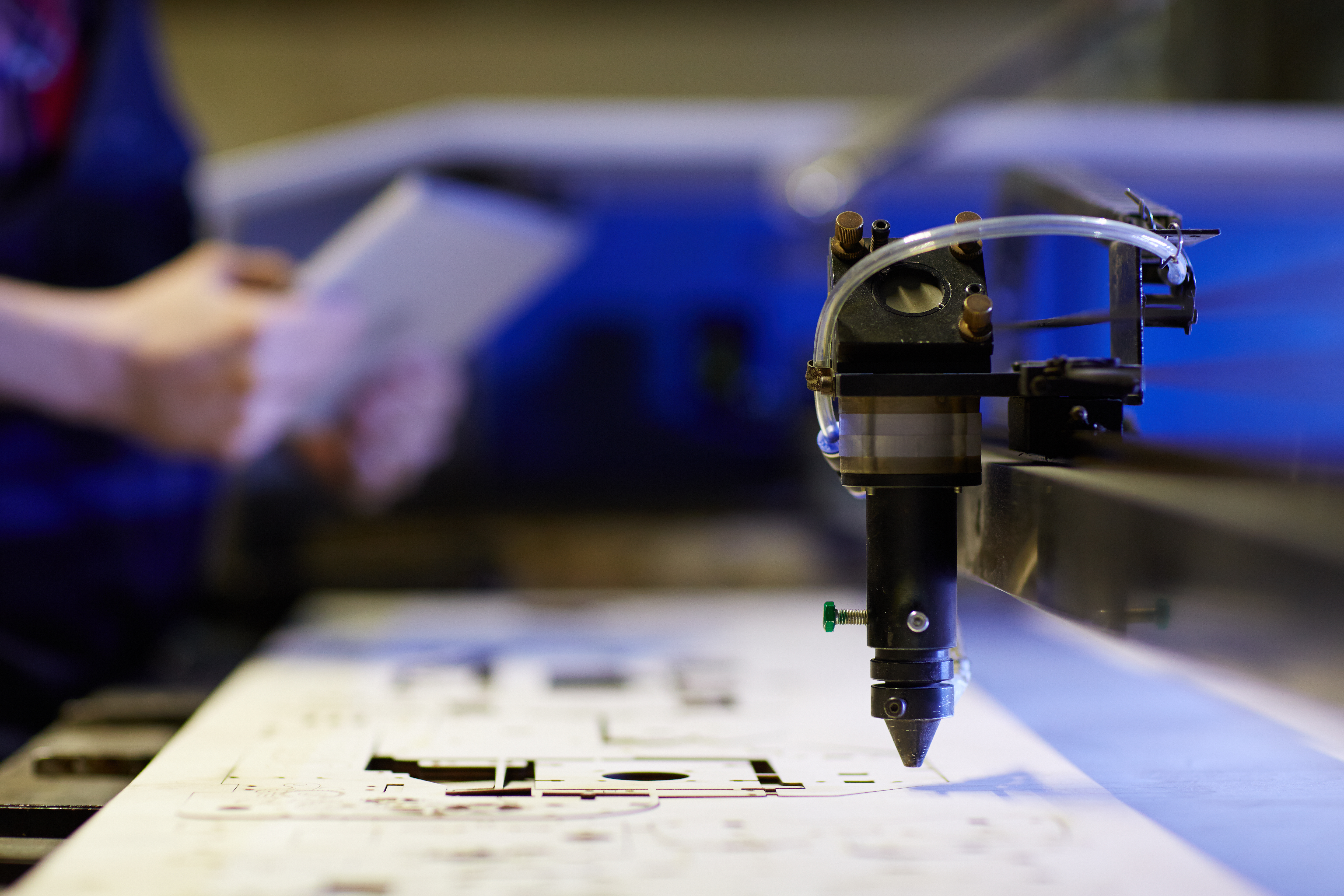
The machine has to match the shape. A flat-bed system is fine for open faces, but curved walls, deep pockets, and ribs need a head that can tilt and a tool that can rotate so the beam stays at the correct angle. That is why shops with5 axis capability can hold detail where basic machines lose it. Ask directly which machine they will run for your specific tool, not what they own in general.
Depth is the whole point of 3D work. Too shallow and the design looks weak on the moulded part. Too deep and you have changed the tool more than intended. A capable shop sets controlled parameters and checks depth during the run, not only at the end. Ask how they measure and hold depth to your drawing.
The file decides the result. A good team can review your artwork, repair weak lines, scale and position the design, build the 3D layers, and run a test before committing to the tool. If you can only supply a photo or a rough idea, ask whether they will prepare and prove a proper file. Poor file work shows up as broken edges and uneven relief that no machine can rescue.
Engraving quality starts with the surface. Scratches, rust, or an old grain reduce clarity. A complete provider can clean and prepare the tool withmould polishing orsand and shot blasting before engraving, so you are not shuttling the mould between shops and risking damage in transit.
Ask what they check before the tool leaves: design size, position, depth, line clarity, surface condition, alignment, and final cleanliness. A shop that can describe its inspection steps is a shop that catches small defects before you do.
Because the design lives in a digital file, a good company stores it safely so the same engraving can be repeated on a replacement insert or a second tool later. Confirm they keep your file and can reproduce the work.
30 years of claims mean little without evidence. Look for real project photos, sectors, and references. A vendor that has served demanding buyers in automotive, footwear, and consumer goods has been tested by tolerances that matter.
Keep this short list handy for the first call.
Do you specialise in mould engraving, or general engraving? Which machine will you use for my tool? Can you engrave curved and deep areas? How do you control and check depth? Do you offer polishing and preparation? Can you prepare the digital file? How do you inspect the finished design? Can you repeat the same design later? What do you need for a quote, and what is the delivery time?
Clear answers make the comparison easy. Vague answers are an answer in themselves.
Give the vendor the full picture so the price and timeline hold. Send the mould drawing and photographs, the size and weight, your vector or 3D design file, the required depth, the exact engraving location, the surface condition, the number of cavities, and your delivery date. The clearer the brief, the fewer surprises later.
Most engraving failures trace back to a handful of causes. Weak artwork produces broken lines. The wrong machine struggles on curves and deep pockets. Incorrect depth makes the design too faint or too aggressive. Poor surface preparation blurs fine detail. Bad positioning places a good design in the wrong spot. And a skipped final inspection lets small defects reach the customer. Every one of these is avoidable with the right shop and the right process order.
A 3D engraving quote is built from the mould size, the engraved area, the detail and depth of the design, the surface shape, the number of cavities, file preparation, surface condition, machine time, and the delivery schedule. A simple number costs far less than a deep 3D relief. As with texturing, ask for drawings and photographs to be reviewed before any figure is confirmed, and be wary of a quote given without seeing the tool.
A few warning signs should end the conversation early. A quote given without seeing your drawing usually means the scope is guessed rather than planned. A vendor who cannot name the machine they will run, or who dodges questions about depth checking, is telling you something. No sample work, no references, and no stored files point to a shop that treats each job as a one-off rather than a repeatable process. And a price that sits far below every other quote almost always hides a smaller scope that resurfaces as extra charges later. Trust the vendor who explains the trade-offs plainly over the one who only reassures you.
Jai Ambay Etching Process is a mould surface finishing and texturing company running since 1996, with more than 30 years of hands-on experience from our Bawana, Delhi NCR facility. Manufacturers supplying brands such as Maruti Suzuki, Samsung, Michelin, and Bata rely on us for3D laser engraving, 5-axis texturing,laser marking, polishing, etching, and coating, all under one roof. Because the same team prepares, engraves, and inspects the tool, handling is reduced, and quality stays consistent from start to finish.
Send your design and mould photographs for a free quote within 24 hours. Call +91 98109 88206, reach us on WhatsApp, or use thecontact page.
It creates deep, detailed, permanent designs on mould surfaces using a digitally controlled laser that removes material in layers.
Yes. A 5-axis system can reach curved faces, side walls, ribs, and deep sections while holding the correct angle.
Yes. Material is removed from the tool, so the design does not fade the way printed labels do.
Usually a vector or 3D file, the mould drawing, dimensions, and the required depth. A shop can also build a file from a sample.
Often, if the surface has rust, scratches, or an old grain. Preparation gives cleaner, sharper engraving.
By design size, depth, complexity, mould shape, cavities, surface condition, and machine time, confirmed after the drawing is reviewed.
©2026 Jai Ambay Etching Process. All Rights Reserved.