
Every serial number, batch code, and logo you see stamped on a machined part, a tool, or a plastic housing has to survive handling, heat, and cleaning without wearing off. Printed labels peel. Ink fades. That is why manufacturers across Delhi NCR turn to laser marking, and why choosing the right laser marking company in Delhi NCR is a practical decision rather than a cosmetic one.
Delhi NCR is one of India's densest manufacturing belts, from Bawana and Narela in the north to the auto and electronics clusters in Gurugram, Faridabad, and Noida. This piece looks at what laser marking actually does, the materials and industries it fits, and how to buy it well when your supplier is nearby.
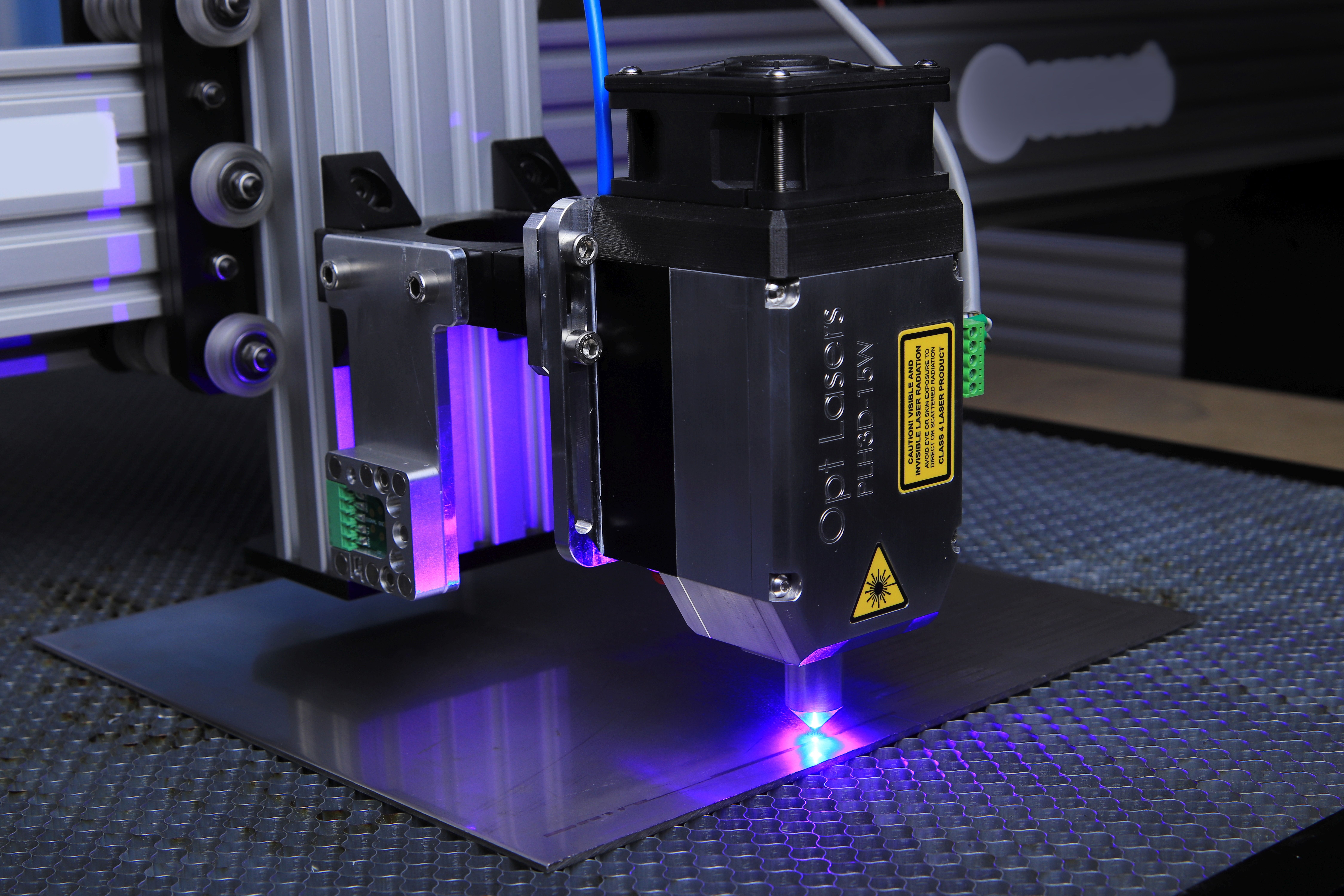
Laser marking uses a focused beam to create a permanent mark on a surface, usually without cutting deep into the material. Depending on the settings, it can darken, etch, or lightly engrave the surface to produce clean, high-contrast text and graphics.
It is different from deep3D laser engraving, which removes more material to build relief and depth. Marking is about clear, durable information on the surface. If you need a logo you can feel or a deep cavity design, that is engraving. If you need a crisp code that lasts, that islaser marking.
A capable company marks a wide range of materials used across the region's factories.
Material | Typical items | Common mark |
Stainless and mild steel | Tools, dies, fittings, fasteners | Logos, part numbers |
Aluminium | Housings, brackets, panels | Serial numbers, codes |
Engineering plastics | Housings, connectors, caps | Batch codes, branding |
Brass and copper | Valves, electrical parts | Identification marks |
Coated and anodised metals | Consumer and auto parts | High-contrast graphics |
The right settings change with the material, which is why a shop that marks many substrates every day gives more consistent results than a general workshop trying it occasionally.
The uses fall into a few clear buckets.
Traceability is the biggest. Serial numbers, batch codes, QR codes, and barcodes let a manufacturer track a part through production, warranty, and recall. Compliance and safety marks carry ratings, standards, and warnings that must stay legible for the life of the part. Branding puts a permanent logo or model name on the product. And part identification keeps tools, dies, and inserts labelled so they are never mixed up on a busy floor.
The demand map follows the region's factories. Automotive and auto-component makers in Gurugram and Faridabad mark engine, transmission, and body parts for traceability. Electronics and appliance manufacturers mark housings, boards, and modules. Pharmaceutical and packaging units mark equipment and tooling. Tool rooms and mould makers across Bawana and Narela mark their dies and inserts. Footwear and consumer goods brands mark soles, plates, and product bodies.
Jai Ambay Etching Process already serves this base. Manufacturers supplying names such as Maruti Suzuki, Samsung, Michelin, Relaxo, and Bata trust our surface finishing work, and marking sits naturally alongside it.
Choosing local is not only about distance. When your marking company is inside the same industrial belt, turnaround is faster, samples and approvals move quickly, and you can send a tool by short courier rather than shipping it across the country. Components can reach our Bawana facility easily from anywhere in Delhi NCR, and a quote comes back within a day.
There is also a quality benefit. A shop that also handlesmould polishing, texturing, and engraving understands surfaces, so the marking is planned to sit correctly on a prepared face rather than fighting scratches or an old grain.
Use a short set of checks before you commit.
Ask what materials they mark regularly, because breadth signals experience. Ask to see sample marks on a material like yours, since contrast and crispness are easy to judge by eye. Confirm they can produce the mark types you need, whether that is a QR code, a fine logo, or a data matrix. Check whether they can handle your part size and shape, especially if it is curved or awkward. Ask about permanence and whether the mark resists heat, cleaning, and handling in your use case. And confirm turnaround and whether they can repeat the same job later from a saved file.
A good answer to each of these is worth more than the lowest price, because a poor mark that has to be redone costs you time on the line.
To get an accurate price fast, share the part details: the material, the item photographs or drawing, the mark you need such as a logo, serial, or QR code, the required size and position, the quantity, and your delivery date. If you have a vector logo file, send it, because a clean file gives a cleaner mark. The more complete the brief, the tighter the quote.
It is worth matching the job to the process so you do not overpay or underspecify. Choose marking for permanent surface information such as codes, serials, and logos. Chooselaser engraving or 3D engraving when you need depth, relief, or a design you can feel. Choose5 axis laser texturing when a whole mould surface needs a grain or pattern for the finished part. A shop that offers all three can point you to the right one instead of forcing your job into the only service it sells.
A few issues show up again and again. Picking a vendor with no sample on your material leads to weak or fuzzy marks. Ignoring the surface condition means the mark sits on rust or scratches. Choosing on price alone often hides limited machine capability. And skipping a saved file means you cannot easily repeat the mark on future batches. Each of these is simple to avoid by asking the right questions up front.
You do not need lab equipment to spot quality. Hold the sample under normal light and check that the mark is sharp at the edges, even in colour, and readable at the size it will actually be used. A QR or data matrix code should scan first time from a phone, not after several tries. Run a finger and a cloth over it, because a durable mark does not smudge or lift. Check that the contrast holds against the material's own colour, since a mark that disappears on a shiny or dark surface is a settings problem, not a lighting one. If a shop is confident in its work, it will happily mark a test piece in your material before you commit the full batch.
Jai Ambay Etching Process has delivered precision surface work since 1996, more than 30 years from our facility at M-132, Sector 1, Bawana Industrial Area, New Delhi. Alongside laser marking, we offer 3D laser engraving, 5-axis texturing, mould polishing, chemical etching, and PTFE coating, so your tool can be prepared, marked, and inspected byexpert engineers.
Send your part details and logo for a free quote within 24 hours. Call +91 98109 88206, message us on WhatsApp, or use thecontact page to get started.
It creates permanent, high-contrast marks such as logos, serial numbers, QR codes, and part identification on metals, plastics, and coated parts.
Yes. The mark is fused into the surface, so it resists handling, heat, and cleaning far better than printed labels.
Steel, aluminium, brass, copper, engineering plastics, and coated or anodised parts, with settings adjusted to each material.
Yes. QR codes, data matrix codes, barcodes, serial and part numbers are common marking jobs for traceability.
Marking creates surface-level information. Engraving removes more material to build depth and relief for logos or designs you can feel.
Share the material, part photos, the mark you need, size, quantity, and delivery date, and we respond within 24 hours.
©2026 Jai Ambay Etching Process. All Rights Reserved.