
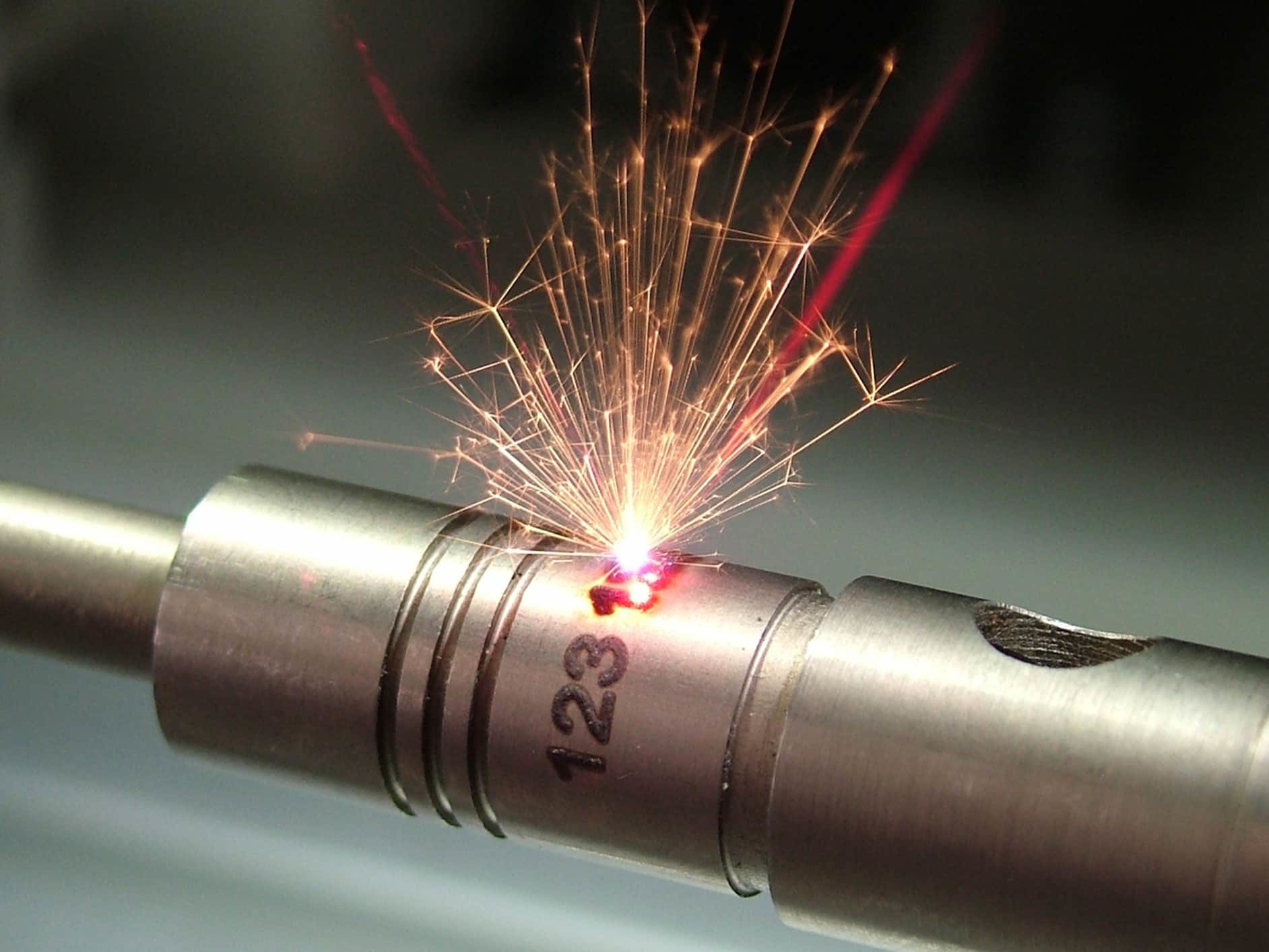
What is Laser Marking?
Laser marking is a modern technology that uses a focused laser beam to create permanent marks on the surface of materials. The laser changes the material’s surface properties to produce text, barcodes, serial numbers, logos, and patterns.
Unlike traditional marking methods such as ink printing or stamping, laser marking does not use physical tools or chemicals. The non-contact process ensures high accuracy and prevents damage to the material.
Industries use laser marking for product identification, traceability, branding, and quality control.
How Laser Marking Process Works
The laser marking process follows several controlled steps to create clear and permanent markings.
1. Design Creation
Operators create the marking design using specialized software.
2. Material Positioning
Technicians place the material inside the laser marking machine.
3. Machine Configuration
Operators adjust laser power, speed, and marking parameters.
4. Laser Marking Operation
The laser beam scans the surface and creates the desired mark by heating or altering the material surface.
5. Inspection
Technicians inspect the final marking to ensure clarity and precision.
This process allows manufacturers to produce consistent and permanent markings.
Types of Laser Marking Machines

Different types of laser marking machines are available depending on the material and application.
Fiber Laser Marking Machine
Fiber lasers are ideal for marking metals such as stainless steel, aluminum, and brass. They provide high precision and long lifespan.
CO2 Laser Marking Machine
CO2 lasers are mainly used for non-metal materials like wood, plastic, glass, and acrylic.
UV Laser Marking Machine
UV lasers provide ultra-precise marking and are commonly used for delicate materials and electronic components.
Each machine type offers specific advantages depending on the industrial requirement.
Advantages of Laser Marking Technology
Laser marking technology offers several benefits compared to traditional marking methods.
Key advantages include:
-
Permanent and fade-resistant marking
-
Extremely high precision and accuracy
-
High-speed production capability
-
Minimal maintenance cost
-
Environmentally friendly process
-
No consumables like ink or chemicals
Because of these benefits, laser marking has become the preferred marking technology for many industries.
Applications of Laser Marking in Industry

Laser marking plays an important role in modern manufacturing industries.
Common industrial applications include:
-
Product serial numbers and identification
-
Barcode and QR code marking
-
Automotive component marking
-
Electronics and circuit board marking
-
Medical device identification
-
Branding and logo marking
These applications help manufacturers maintain product traceability and quality standards.
Laser Marking vs Laser Engraving
Although laser marking and laser engraving are similar technologies, they serve different purposes.
| Feature | Laser Marking | Laser Engraving |
|---|---|---|
| Material Removal | Minimal | Removes material |
| Surface Depth | Very shallow | Deeper engraving |
| Speed | Faster | Moderate |
| Application | Identification and labeling | Decorative and deep marking |
| Surface Damage | None | Slight material removal |
Laser marking is ideal for identification, while laser engraving is better for deeper and decorative designs.
Conclusion
Laser marking is one of the most advanced and reliable marking technologies used in modern industries. It provides permanent, high-precision marks without damaging the material surface.
With advanced laser marking machines and modern laser marking technology, industries can achieve efficient production, accurate product identification, and improved quality control.
As manufacturing standards continue to grow, laser marking technology will remain an essential solution for industrial marking and product traceability.