
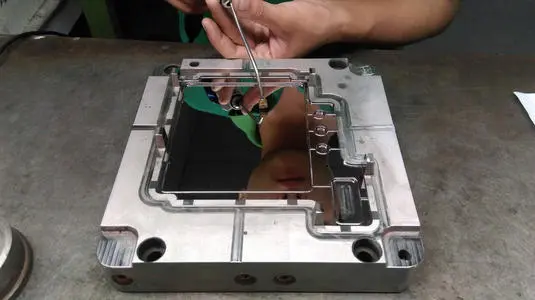
What is Mould Polishing?
Mould polishing is a finishing process used to smooth and refine the surface of molds used in manufacturing. It removes small scratches, tool marks, and surface imperfections from mould cavities.
A well-polished mold improves the appearance and quality of the final product. Industries that use plastic injection moulds rely on high-quality polishing to achieve smooth surfaces and precise shapes.
Modern industrial mould polishing methods use specialized tools, polishing compounds, and skilled techniques to achieve high-quality finishes.
Mould Polishing Process
The mould polishing process involves several stages to achieve a smooth and precise surface.
1. Surface Preparation
Technicians clean the mould surface to remove dust, oil, and debris.
2. Rough Polishing
Workers remove machining marks using abrasive stones or grinding tools.
3. Fine Polishing
Technicians use finer abrasives and polishing compounds to smooth the surface.
4. Mirror Finishing
For high-quality molds, experts perform final polishing to achieve a mirror-like finish.
5. Inspection
Technicians inspect the mould surface to ensure uniform polishing and high precision.
This process ensures excellent mold performance and product quality.
Industrial Mould Polishing
Industrial mould polishing is widely used in manufacturing industries where molds must produce high-quality parts.
Industries that require mold polishing include:
-
Plastic injection molding
-
Automotive manufacturing
-
Electronics production
-
Medical equipment manufacturing
-
Consumer product manufacturing
Industrial polishing improves mould performance and reduces defects in molded products.

Precision Mould Polishing
Precision mould polishing focuses on achieving extremely smooth surfaces with high accuracy. This method is important when manufacturing products that require flawless surface finishes.
Advantages include:
-
High surface smoothness
-
Improved mold release
-
Better product appearance
-
Reduced manufacturing defects
Precision polishing is essential for high-quality molds used in advanced manufacturing.
Plastic Injection Mould Polishing
Plastic injection mould polishing is one of the most common applications of mold polishing. Smooth mold surfaces allow plastic parts to be released easily after molding.
Benefits include:
-
Improved product finish
-
Reduced friction during mold release
-
Higher production efficiency
-
Longer mold lifespan
High-quality polishing ensures that plastic parts come out with a smooth and glossy surface.
Mold Polishing Services
Many manufacturers provide professional mold polishing services for industries that require high-precision molds.
These services include:
-
Mold surface finishing
-
Mirror polishing
-
Mold repair and polishing
-
Precision cavity polishing
Professional polishing services help maintain mold performance and production quality.
High Precision Mold Polishing
High precision mold polishing uses advanced polishing tools and techniques to achieve extremely smooth and accurate surfaces.
This process is often required for:
-
Optical components
-
Medical equipment molds
-
Automotive parts molds
-
Electronic component molds
High precision polishing ensures consistent quality and excellent product appearance.
 Comparison Table – Unpolished Mold vs Polished Mold
| Feature | Unpolished Mold | Polished Mold |
|---|---|---|
| Surface Quality | Rough | Smooth |
| Product Appearance | Dull finish | Glossy finish |
| Mold Release | Difficult | Easy |
| Product Defects | Higher | Lower |
| Mold Life | Shorter | Longer |
| Production Efficiency | Moderate | High |
Applications of Mould Polishing
Mould polishing is essential for many manufacturing industries.
Common applications include:
-
Plastic injection molds
-
Automotive parts manufacturing
-
Consumer product molds
-
Medical device molds
-
Electronic component molds
-
Packaging product molds
Polished molds ensure high-quality finished products with smooth surfaces.
Conclusion
Mould polishing is an essential finishing process in modern manufacturing. It improves mold surface quality, enhances product appearance, and increases mold durability.
With advanced precision mould polishing techniques and professional mold polishing services, industries can achieve superior product quality and efficient production.
As manufacturing technology continues to advance, industrial mould polishing will remain a critical process for producing high-quality molded products.