
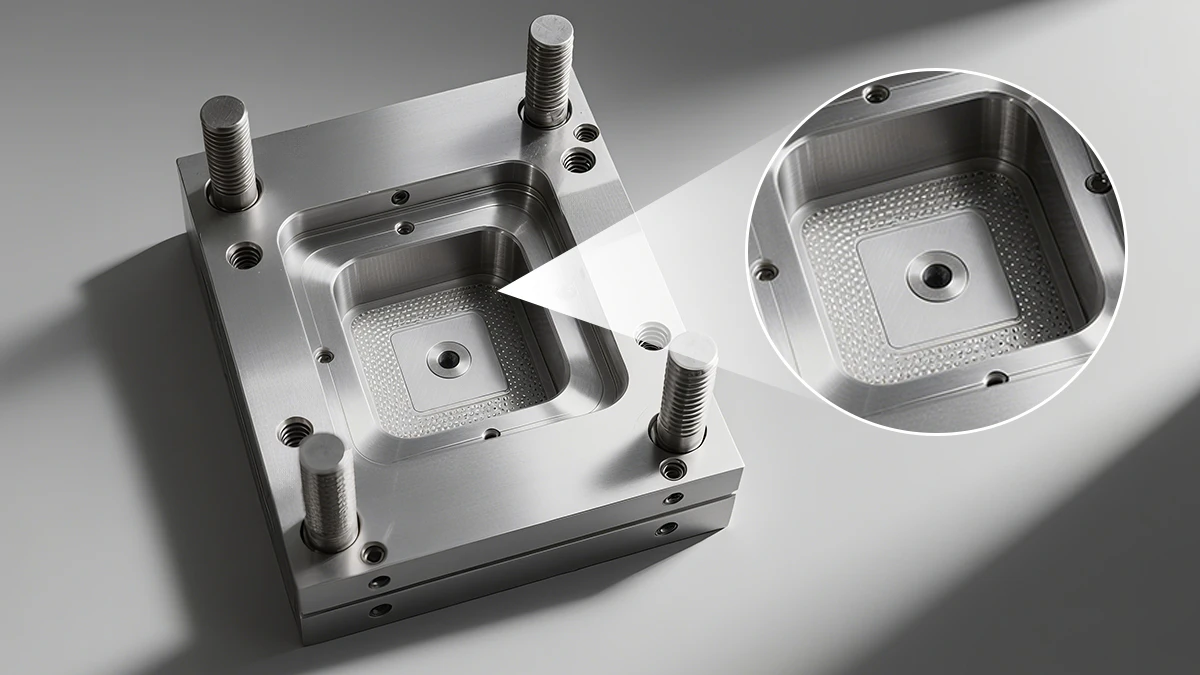
What is Mould Texturing?
Mould texturing is a surface finishing process used to create specific patterns or textures on the surface of molds. These textures are transferred to the final molded product during the manufacturing process.
Manufacturers use mould surface texturing to improve the appearance, grip, and functionality of plastic products. The technique helps produce decorative patterns, matte finishes, and leather-like textures on molded parts.
Industries widely use industrial mould texturing in automotive parts, electronics housings, consumer goods, and plastic products.
Mould Texturing Process
The mould texturing process involves several steps to create precise and uniform textures on mold surfaces.
1. Surface Preparation
Technicians clean and polish the mold surface to remove impurities.
2. Design Creation
Engineers prepare the required texture design using specialized pattern templates.
3. Masking and Protection
Non-textured areas are protected using masking materials.
4. Texturing Application
Experts apply chemical etching or laser technology to create the desired surface texture.
5. Cleaning and Inspection
Technicians clean the mold and inspect the texture quality to ensure accuracy.
This process ensures high-quality surface textures that are transferred to molded products.
Mould Surface Texturing
Mould surface texturing is widely used to improve both the aesthetic and functional qualities of molded products.
Benefits include:
-
Improved product appearance
-
Better grip and feel
-
Reduced visible scratches
-
Hiding of manufacturing marks
-
Enhanced product value
Manufacturers use this technique to create attractive product finishes.

Industrial Mould Texturing
Industrial mould texturing is commonly used in large-scale manufacturing where molds must produce consistent surface patterns.
Industries using mould texturing include:
-
Automotive manufacturing
-
Consumer electronics production
-
Plastic packaging industry
-
Home appliance manufacturing
-
Furniture and interior design industry
Industrial mould texturing ensures uniform design and product quality.
Injection Mould Texturing
Injection mould texturing is applied to molds used in plastic injection molding processes. The textured mold surface transfers the pattern directly to the plastic product during molding.
Common textures include:
-
Leather patterns
-
Matte finishes
-
Wood grain textures
-
Geometric patterns
This method helps manufacturers create attractive and functional plastic products.
Plastic Mould Texturing
Plastic mould texturing is specifically used for molds that produce plastic components. The technique enhances the appearance and usability of plastic products.
Applications include:
-
Automotive dashboards
-
Electronic device covers
-
Household appliances
-
Plastic containers
-
Consumer product housings
Plastic mould texturing improves both design and performance.

Precision Mould Texturing
Precision mould texturing focuses on creating highly accurate and detailed surface patterns. Advanced technologies such as laser texturing and chemical etching ensure consistent results.
Advantages include:
-
High design accuracy
-
Uniform surface patterns
-
Long-lasting mold performance
-
Improved product aesthetics
Precision texturing helps manufacturers maintain high production standards.
Comparison Table – Smooth Mold Surface vs Textured Mold Surface
| Feature | Smooth Mold Surface | Textured Mold Surface |
|---|---|---|
| Appearance | Plain finish | Decorative patterns |
| Grip | Low | Improved grip |
| Scratch Visibility | More visible | Less visible |
| Product Design | Basic | Enhanced design |
| Production Value | Standard | Premium appearance |
Applications of Mould Texturing
Mould texturing is widely used in industries that require high-quality surface finishes.
Common applications include:
-
Automotive interior parts
-
Plastic consumer products
-
Electronic device housings
-
Household appliances
-
Packaging products
-
Decorative plastic components
The technology helps manufacturers produce attractive and durable products.
Conclusion
Mould texturing is an important surface finishing process used in modern manufacturing. It improves product appearance, enhances grip, and adds decorative patterns to molded components.
With the help of industrial mould texturing technology, injection mould texturing processes, and precision mould texturing techniques, manufacturers can create high-quality products with consistent surface finishes.
As product design continues to evolve, mould surface texturing will remain a key technology for improving both aesthetics and functionality in manufacturing.