
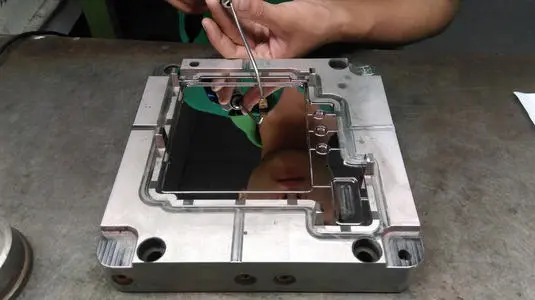
Mould Polishing plays a critical role in precision manufacturing. It directly impacts surface quality, product appearance, dimensional accuracy, and mould life. Industries that rely on injection molding, die casting, and tool manufacturing cannot achieve premium results without professional mould polishing.
A properly polished mould reduces defects, improves part release, enhances gloss, and increases production efficiency. Whether you need a mirror finish for cosmetic packaging or functional finishing for industrial components, mould polishing ensures consistent and high-quality output.

Mould polishing is a surface finishing process that removes machining marks, scratches, and surface irregularities from mould cavities and cores. Technicians refine the surface using abrasives, polishing stones, diamond paste, and specialized tools.
Manufacturers perform mould polishing to:
Improve product surface quality
Achieve mirror or matte finishes
Reduce friction during part ejection
Increase mould durability
Minimize production defects
Injection Mould Polishing ensures smooth plastic part production. A polished injection mould improves material flow and reduces visible defects.
Best For:
Plastic automotive parts
Consumer goods
Electronic housings

Plastic Mould Polishing focuses on moulds used for thermoplastic and thermoset components. It enhances gloss, clarity, and overall aesthetics.
Key Benefit:
It improves transparency and surface consistency in finished plastic parts.
Mirror Finish Mould Polishing produces an ultra-smooth reflective surface. Technicians use diamond polishing compounds to achieve high-gloss results.
Ideal For:
Optical lenses
Cosmetic packaging
High-end consumer products
Industrial Mould Polishing supports heavy-duty production environments. It improves durability and ensures reliable performance under high manufacturing loads.
Industries include:
Automotive
Aerospace
Electronics
Packaging
Precision Mould Polishing maintains tight dimensional tolerances while refining the surface.
Applications:
Micro components
Technical plastic parts
High-accuracy tooling
Die and Mould Polishing enhances both metal forming dies and plastic mould tools. It improves wear resistance and material flow.
Manual Mould Polishing allows skilled technicians to control fine details and intricate geometries. It works well for small batches and complex cavities.
Diamond Mould Polishing delivers ultra-fine finishing using diamond paste. It achieves extremely smooth and reflective surfaces.
Mold Surface Finishing includes polishing, texturing, and coating processes that improve appearance and performance.
Tool & Die Polishing refines forming tools to reduce stress concentration and extend service life.
| Polishing Type | Surface Finish Level | Best Application | Precision Level | Production Scale |
|---|---|---|---|---|
| Injection Mould Polishing | Smooth to Gloss | Plastic components | High | Mass production |
| Plastic Mould Polishing | Gloss / Clear | Transparent plastics | High | Consumer goods |
| Mirror Finish Mould Polishing | Ultra Mirror | Optical & cosmetic parts | Very High | Premium production |
| Industrial Mould Polishing | Functional Smooth | Automotive & heavy tools | High | Large-scale industry |
| Precision Mould Polishing | Fine Technical Finish | Micro components | Extremely High | Technical industries |
| Die and Mould Polishing | Wear-Resistant Smooth | Metal forming dies | High | Industrial forming |
| Manual Mould Polishing | Custom Finish | Complex cavities | Skill-based High | Small batches |
| Diamond Mould Polishing | Ultra Fine Reflective | High-gloss moulds | Very High | Premium applications |
| Mold Surface Finishing | Variable Finish | Decorative & functional parts | High | Multi-industry |
| Tool & Die Polishing | Durable Smooth | Metal tools | High | Industrial production |
A polished mould produces smooth and defect-free finished parts.
It achieves gloss, texture, or mirror finishes as required.
Polishing reduces wear and prevents surface damage.
Smooth cavities allow faster material flow and easier part release.
High-quality finishing minimizes scratches, flow lines, and surface marks.
Plastic injection molding
Automotive component manufacturing
Electronics production
Medical device manufacturing
Packaging industry
Optical product manufacturing
Mould Polishing is not just a finishing step. It is a critical process that determines product quality, production efficiency, and tool durability. Whether you require Injection Mould Polishing, Mirror Finish Mould Polishing, Diamond Mould Polishing, or Tool & Die Polishing, professional surface finishing ensures consistent and premium results.
Investing in high-quality mould polishing improves performance, reduces defects, and enhances brand value in competitive industries.
©2026 Jai Ambay Etching Process. All Rights Reserved.
