
Chemical Etching is a precision manufacturing process used to create detailed patterns and components by removing material from a metal surface using chemical solutions.
This technology is also known as photo chemical machining or metal chemical etching. It allows manufacturers to produce complex designs without mechanical cutting or machining.
Unlike traditional manufacturing processes, chemical etching removes metal through controlled chemical reactions. This method ensures high accuracy, smooth edges, and minimal material stress.
Industries widely use chemical etching technology for electronics, aerospace components, medical devices, automotive parts, and decorative metal products.
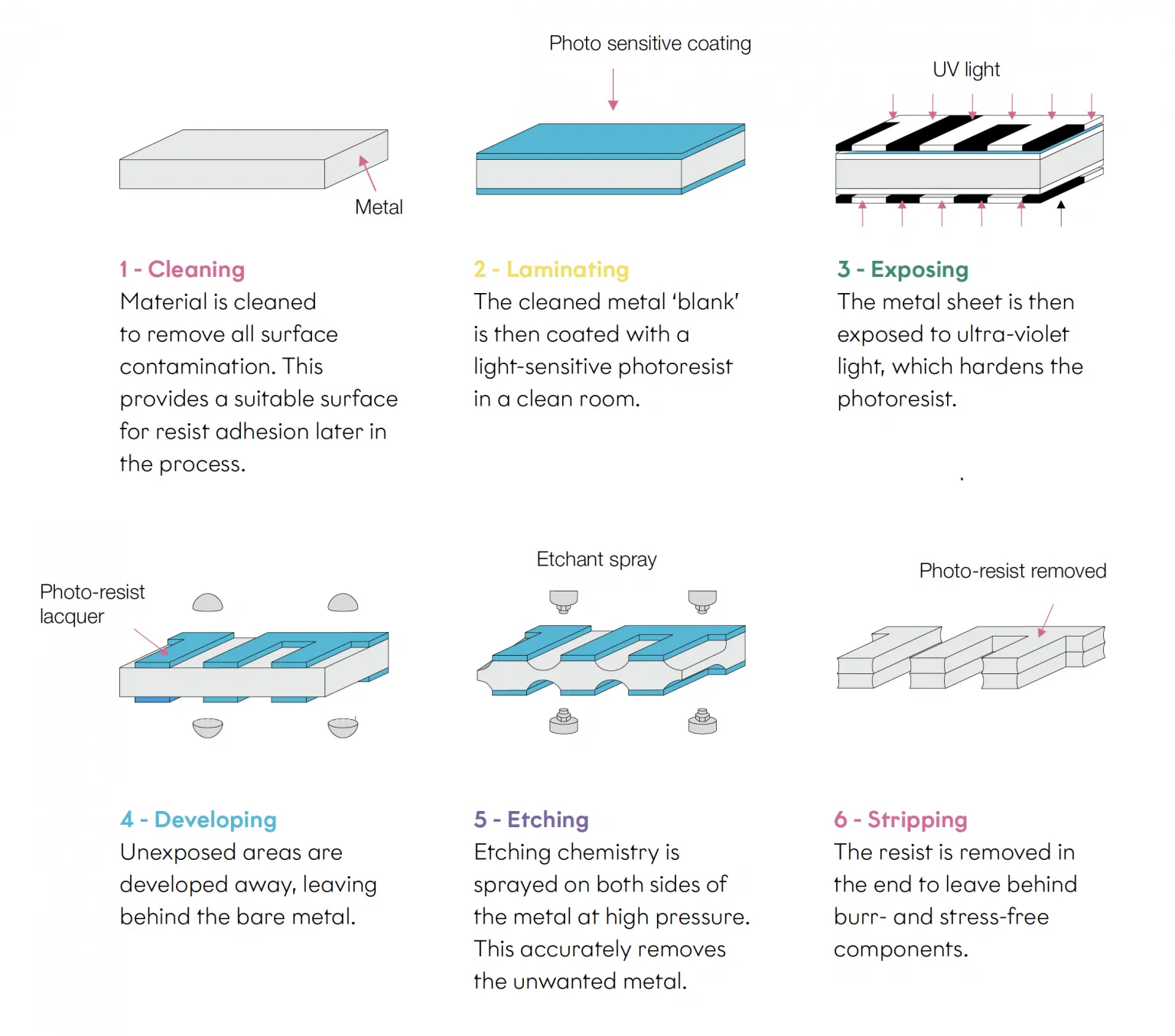
The chemical etching process follows several controlled steps to produce precise metal components.
Manufacturers clean the metal sheet to remove oil, dust, and surface impurities.
A light-sensitive protective coating called photoresist is applied to the metal surface.
Engineers transfer the required design pattern onto the photoresist using UV light.
The metal sheet is exposed to an etching solution that dissolves the unprotected metal areas.
Technicians remove the remaining photoresist and clean the finished component.
This process creates extremely precise and burr-free metal parts.
Chemical etching technology has become an essential manufacturing solution for producing high-precision metal parts.
The technology offers several advantages:
No mechanical stress on materials
Ability to create intricate patterns
High accuracy for thin metal sheets
Cost-effective for medium and large production volumes
Environmentally controlled chemical processes
Because of these benefits, industries prefer chemical etching for components that require extreme precision.
Industrial chemical etching is widely used in modern manufacturing to produce components that require tight tolerances and fine detail.
Industries using this technology include:
Aerospace manufacturing
Electronics and circuit production
Automotive engineering
Medical equipment manufacturing
Decorative metal products
The process allows industries to produce high-quality components quickly and efficiently.

Metal chemical etching works effectively on many types of metals. Manufacturers use this method to create precision components from thin metal sheets.
Common metals used in chemical etching include:
Stainless steel
Copper
Brass
Aluminum
Nickel alloys
Metal chemical etching ensures smooth edges and accurate dimensions without damaging the material structure.
Precision chemical etching focuses on producing highly detailed metal parts with exceptional accuracy.
Applications include:
Electronic connectors
Micro components
Medical device parts
Aerospace components
Industrial filters and screens
Because the process does not involve mechanical force, it maintains the structural integrity of the metal.

The chemical etching manufacturing process is ideal for producing complex designs that are difficult to achieve using traditional machining methods.
Key advantages include:
High design flexibility
Reduced tooling costs
Consistent production quality
Ability to manufacture micro-level features
Efficient production for large volumes
Manufacturers rely on this process for precision engineering applications.
| Feature | Traditional Machining | Chemical Etching |
|---|---|---|
| Process Type | Mechanical Cutting | Chemical Material Removal |
| Precision | Moderate | Extremely High |
| Surface Finish | May require finishing | Smooth and burr-free |
| Material Stress | High | Minimal |
| Design Complexity | Limited | Highly Complex Designs |
| Production Efficiency | Moderate | High for thin components |
Chemical etching is used in many industries due to its precision and efficiency.
Common applications include:
Electronic circuit components
Precision metal parts
Aerospace components
Medical device manufacturing
Industrial filters and meshes
Decorative metal panels
The technology allows manufacturers to create complex designs while maintaining high production accuracy.
Chemical Etching is one of the most reliable and precise manufacturing technologies for producing detailed metal components. The process offers excellent accuracy, smooth finishes, and the ability to create intricate designs without mechanical stress.
With the help of advanced chemical etching technology, precision chemical etching methods, and modern manufacturing processes, industries can produce high-quality metal parts efficiently.
As manufacturing demands continue to grow, industrial chemical etching will remain an essential technology for precision engineering and metal fabrication.
©2026 Jai Ambay Etching Process. All Rights Reserved.
