
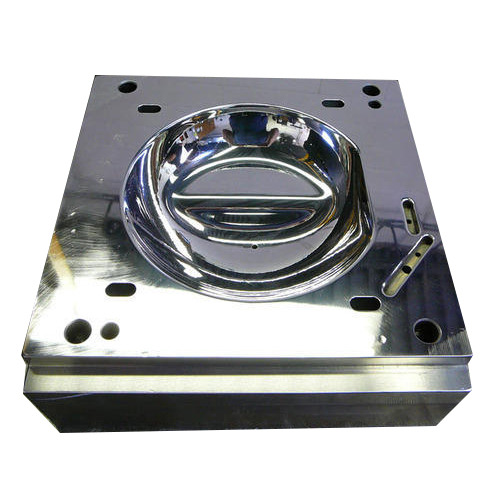
Mould Polishing is a surface finishing process used to improve the smoothness and quality of molds used in manufacturing. The process removes scratches, tool marks, and surface imperfections to create a smooth or mirror-like finish.
Manufacturers widely use mould polishing for molds used in plastic injection molding, die casting, and industrial component production. A well-polished mold ensures better product quality, easier material flow, and smooth product release.
Industries rely on professional mould polishing services to maintain precision molds and achieve high-quality production results.
The mould polishing process involves several steps to achieve the desired surface finish.
Technicians inspect the mold surface to identify scratches, tool marks, or irregularities.
They remove larger surface imperfections using abrasive stones or grinding tools.
Operators use finer abrasives and polishing compounds to improve surface smoothness.
Technicians use specialized polishing pastes and tools to achieve a mirror-like surface finish.
The final step involves cleaning the mold and checking the surface quality for precision and smoothness.
This step-by-step process ensures that the mold surface meets industrial quality standards.
Professional mold polishing services help manufacturers maintain the quality and performance of their molds. Skilled technicians use advanced tools and techniques to restore mold surfaces and improve their finish.
Benefits of professional polishing services include:
Improved mold performance
Better product surface quality
Reduced production defects
Extended mold lifespan
Faster production cycles
Manufacturers often rely on expert polishing services to maintain high production efficiency.

Industrial mould polishing plays an important role in modern manufacturing industries. Many products require smooth and glossy surfaces, which can only be achieved with high-quality mold polishing.
Industries using mould polishing include:
Plastic manufacturing
Automotive production
Electronics manufacturing
Consumer product manufacturing
Medical device production
Industrial polishing ensures consistent product quality and reduces manufacturing defects.
Plastic injection mould polishing is essential for producing high-quality plastic components. A polished mold surface allows molten plastic to flow smoothly and form accurate shapes.
Advantages include:
Smooth product surface finish
Reduced friction during molding
Faster mold release
Improved product aesthetics
Lower risk of product defects
Injection molding industries rely heavily on precision polishing for high-performance molds.
Precision mould polishing focuses on achieving extremely smooth surfaces and accurate finishing. This process requires skilled technicians and specialized polishing equipment.
Applications include:
High-precision plastic molds
Optical component molds
Automotive parts molds
Medical device molds
Electronic component molds
Precision polishing ensures the highest surface quality required for advanced manufacturing applications.

Professional mould polishing combines manual expertise with advanced polishing tools to deliver superior surface finishing.
Professionals use techniques such as:
Diamond polishing
Abrasive stone polishing
Ultrasonic polishing
Mechanical polishing
These methods help achieve the required surface finish depending on the mold type and industry requirements.
| Feature | Unpolished Mould | Polished Mould |
|---|---|---|
| Surface Finish | Rough | Smooth or Mirror Finish |
| Product Quality | May have defects | High-quality finish |
| Mold Release | Difficult | Easy and smooth |
| Production Efficiency | Lower | Higher |
| Product Appearance | Poor surface quality | Glossy and attractive |
Mould polishing is widely used in different manufacturing industries.
Common applications include:
Plastic injection molds
Automotive component molds
Consumer product molds
Medical equipment molds
Electronic device molds
Optical component molds
High-quality polishing helps manufacturers produce visually appealing and defect-free products.
Mould Polishing is an essential process in modern manufacturing that improves mold performance, product quality, and production efficiency. The process removes imperfections and creates smooth surfaces that ensure better molding results.
With the help of precision mould polishing, professional mould polishing services, and advanced polishing techniques, industries can maintain high-quality molds and produce superior products.
As manufacturing standards continue to rise, industrial mould polishing will remain a critical process for achieving high-quality production and excellent product finishing.
©2026 Jai Ambay Etching Process. All Rights Reserved.
